




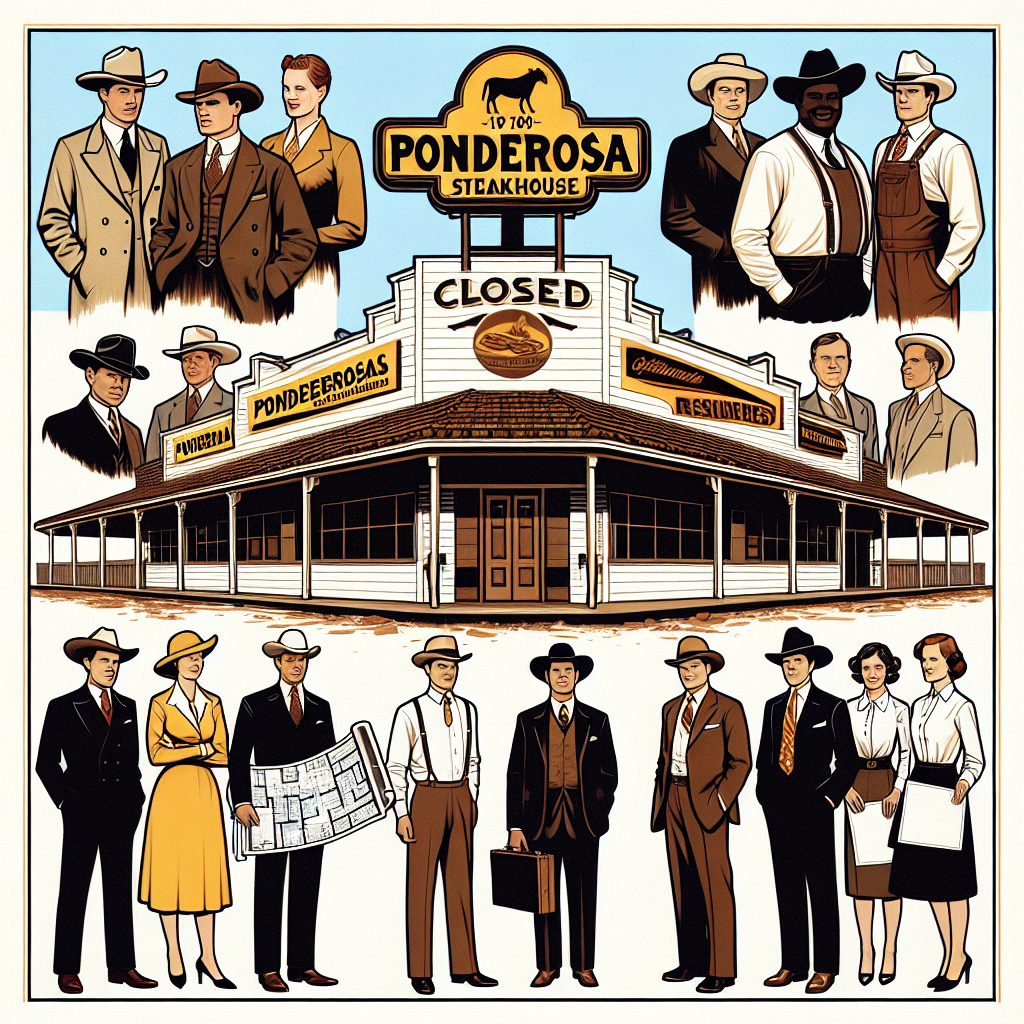
A storied chapter of American dining has ended with the closure of Ponderosa Steakhouse, a veteran of the country’s casual dining scene since its founding in 1965. The chain, renowned for pioneering affordable steakhouse fare and its signature unlimited salad bar, has now shuttered all remaining locations after a nearly six-decade run.
At its height, Ponderosa operated more than 250 restaurants worldwide, carving its niche by offering hearty meals in a warm, family-friendly atmosphere. Its business model and menu innovations set a standard that would be widely emulated within the casual dining sector. However, as the years passed, the brand’s fortunes shifted. A string of bankruptcies and repeated closures gradually reduced its footprint, leaving at times only a single outlet in operation.
As reported by Yahoo Finance, financial headwinds—including declining sales, increased operational expenses, and heightened competition—finally caught up to Ponderosa. Sources quoted from Helm News confirmed the closures were announced by the parent company, highlighting rising costs and shifting consumer dining habits as principal causes. The declining fortunes of Ponderosa mirror those of several other once-popular chains, many of which have struggled to navigate the changing economics of full-service dining and evolving diner expectations.
Yet Ponderosa is not alone in the ebb and flow of America’s casual dining sector. While some of its contemporaries have vanished completely, others cling to life with only a handful of independently operated locations. A few, like Ponderosa, have sought to reinvent themselves. After the parent company filed for bankruptcy and regular operations ceased, former executives acquired the chain’s intellectual property and began exploring revival strategies.
A recent development saw the debut of a new Ponderosa location inside a hotel, featuring a dedicated entrance, patio, and modernized seating. The revived restaurant pays homage to tradition with classic offerings such as its famous salad, while revamping operations for today’s diners. Franchise applications are once again being accepted as part of a broader plan to bring the brand back to various markets across the United States.
This attempted resurgence reflects a broader pattern in the industry. Some brands, under new ownership or management, have managed to reenter the market after periods of dormancy, banking on nostalgia and the enduring demand for communal dining experiences. However, these efforts often face formidable hurdles, including inflation, tight labor markets, and shifting expectations around price and service. Operators frequently respond by raising menu prices and seeking efficiencies, hoping to capture both old loyalists and a new generation of customers.
For now, the future of Ponderosa remains in flux, with no immediate plans for a return to its former scale. Its story stands as a testament to the challenges casual dining brands face—and the persistence required to attempt a comeback in a rapidly changing sector.